Friday, October 1, 2010

Willow Hall added to New Jersey Register

The Passaic River Coalition is pleased to announce that Willow Hall has just been added to the New Jersey Register of Historic Sites. This is an important event for the house because the listing provides further legal protection from future destruction or severe alteration, and will make us eligible for more grants.

Many people felt that adding Willow Hall to the Register was a no brainer, as one reviewer remarked, "What took you so long?" Since the house had always been privately owned, previous owners were never interested in having the house designated as a historic site.

Now that the site is on the State Register, is will be added to the Federal register in about 4 months.

A special thanks to Holt-Morgan-Russell Architects for completing our application and to Marge Brady and Myra Bowie-McCready for attending the application hearing to show their support.

PS- Sorry that it has been two months since the last blog post. It has been rather busy around the office lately but we hope to start posting regularly again soon.

Wednesday, July 14, 2010

Meet Brownie

There was quite a bit of lunchtime excitement today when Katie (the tall intern) found a bat in a plastic display box on top of the refrigerator.


After putting a cover on the top of the box, snapping some photos, and tapping the box to see if the bat was still alive we moved the box out of the house.


As we started relocating the box, it was clear Brownie (named by Alicja the other intern) was definitely alive. We put the box on its side under one of the hemlock trees in the back yard. Brownie perked up pretty quickly and crawled out of the box and started climbing up the tree. And that is where we left our new friend, who will hopefully get some sleep before sunset and not find his (or her) way back into Willow Hall.


We think Brownie is a Little Brown Bat and are trying to figure out how it got into the house. In the meanwhile we will also be disinfecting the kitchen even though Brownie seemed healthy.

Do you have a bat story? Share it with us in the comment section!

Friday, July 9, 2010

Little Steps

Our summer interns have "greened" Willow Hall a little bit more by bringing in hand towels for our kitchen and bathrooms. Before we had been using paper towels. To be clean the staff take turns bring the towels home to be washed once a week. Reducing our paper towel usage means saving trees, the water and energy used to make and ship the product, and less garbage in landfills. (Though yes, we could probably compost the paper towels instead.)

And two of our interns carpool to work to save gas and the small paychecks we give them. Also, if you hire environmental students, give us a call, we have two awesome college graduates looking for full time jobs at the end of the summer!

Monday, June 28, 2010

A New Chandlier!

As our regular readers might recall, we lost a beautiful chandelier in the Willow Bough Foyer this past February. And by lost, we mean it fell off the ceiling, broke into a lot of small pieces, and left a dent in the tile floor. Click here for the original posting. After some consultation, we determined that it was not feasible to repair the broken chandelier.

But we are pleased to announce that we have finally replaced it. The new chandelier is a Victorian period hexagonal hanging lamp found by House Manager Joe and our friends the Brady's at an antiques auction. The photo below is of the lamp in the condition we bought it in.


Unfortunately, one of the lamp's panels had been replaced and didn't match the rest. Instead of trying to replace the odd panel, we opted to swap out all of them. We brought the lamp to Morristown House of Glass who replaced the panels with clear and textured panes. As you can see below, the refurbished lamp looks great!


As a side note, if you, or someone you know, has an interest in broken chandelier parts or dangly crystal things give us a call. The previous chandelier is currently sitting in a box in the attic, and would love to be repurposed into something new.

Tuesday, June 8, 2010

Sea Turtles

Today we received a request from a fellow non-profit, Defenders of Wildlife, to help save loggerhead sea turtles in the Gulf of Mexico. Defenders of Wildlife is working to increase protections for these sea turtles by listing them as endangered under the Endangered Species Act. Click here to take action now.

Loggerhead sea turtles were in trouble before the Gulf oil spill disaster. The number of female loggerheads nesting on Florida beaches – one of the most important habitats for the species – has declined by 50 percent in the past decade. Scientists and government officials have sounded the alarm about what this could mean for the future of the ancient sea mariners. The National Marine Fisheries Service is now proposing to upgrade protection for loggerheads from threatened to endangered under the Endangered Species Act.

These turtles need our help even more now. The world’s second-largest loggerhead nesting area is on the beaches of the southeastern United States, the vast majority of which includes Florida’s central Atlantic beaches.

This area is expected to be threatened by the horrific oil slick, depending on how much of the slick gets picked up by the Loop Current -- a powerful ocean current that could bring the slick around the southern reaches of the state, through the sensitive coral reef and mangrove areas of the Everglades and the Keys, and then into the Gulf Stream and up the east coast of Florida.

The spill could not have happened at a worse time: loggerheads and other sea turtles -- as well as many shorebirds -- are in the peak of their nesting seasons right now.

Oil is extremely toxic to loggerheads and other species. Exposure can cause skin loss, poisoning, drowning and death… which is exactly why we need every available tool to help save the lives of individual loggerheads and save this species from extinction.

Tuesday, June 1, 2010

Wildlife

If you’ve been following this blog, at some point you might have wondered at some point, what’s with all the animals? Isn’t this a river organization? And isn’t this blog supposed to be about a historic house? Are they just trying to woo me with cute animal pictures?


Well, on a really simple level, we do think it is kind of fun to follow and photograph all of the creatures who live around our home. And we hope you enjoy discovering along with us.

But beyond that, they prove an important point (or two). If twenty condominiums had been built on this property, between the construction process and the finished project, many (or most of) the animals we’ve documented would have lost their habitat. Sure, there’s a park next door, but you can only fit so many turtle or chickadee nests in one place. Members of many species (such as owls and hawks) don’t like to live too close together because they compete for limited resources.

Willow Hall also demonstrates that a surprising number of species can be found in suburban habitats. A research project conducted by two interns last summer found 17 bird species, 4 amphibians, 2 reptiles and 6 mammals live or pass through our property. Despite all that had been written about Willow Hall, no one had any idea of this before.

We think that’s pretty impressive for living on the fringe of an urban area such as Morristown. And there are probably more creatures living with us that we haven’t found yet. This summer we would like to begin the process of applying for a Wildlife Habitat Certification for Willow Hall through the National Wildlife Federation. (We’ll have more on that in another post.)

Protecting wildlife habitat is also important to the Passaic River Coalition for a few reasons. Many species, especially amphibians, turtles, and fish, can give us clues about the quality of water in streams, rivers, and wetlands. Habitat that’s healthy for animals is usually healthy for people as well. And protecting predator species also helps keeps other less desirable populations in check. It is much better for our waterways to let birds and bats control the mosquito population than to drain wetlands or douse them with pesticides.

And to us, the world is a richer place because of all the other creatures who share it with us.


A snapping turtle sunbathing on the lawn this morning

Thursday, May 27, 2010

The 10 Most Endangered Historic Sites in New Jersey

Preservation New Jersey has released its 10 Most Endangered Historic Sites in New Jersey for 2010. Willow Hall used to be on this list before we bought it. Historic site funding from the Garden State Trust Fund ballot measure passed in November plays an important role in preserving and restoring sites like these all over the state.

Tuesday, May 25, 2010

Chickadees


We didn't get any blue birds in our three blue bird nest boxes at Willow Hall this year. (They don't seem to have moved into the nest box at Highlands Meadow either.) But we did get a pair of chickadees who moved into the box closest to the house. It seems their young have just hatched since the parent's activity has picked up significantly. They've been flying in and out of the box all day, making it much easier to take this photo through the window.

Initially, female chickadees spend most of their time incubating the eggs while the male bring food. But once the eggs hatch, both parents take turns feeding the young who should fledge in 14 to 18 days. Chickadees are omnivorous, eating insects, seeds, and berries.

Monday, May 24, 2010

Morristown Festival Earth

"Hi there! Want to learn two new big words?"
"No."
"Do you want to learn about clean water and pollution?
"No."
"Would you like to win a cool button about groundwater?"
"No."
"There's really nothing interesting at this table for you then, is there?"
"Yeah."


With the exception of this one tough customer, we had a great day at the Morristown Festival Earth this past Saturday. There was great weather and we met a lot of friendly people who were interested in protecting the environment. Hopefully a few kids also walked away knowing the difference between pervious and impervious landscapes. There's a photo of our demonstration below.


Joe, Laurie (Board Members) and Matt (Land Trust Director) running our table in the afternoon.

Thanks to Sustainable Morristown for putting on a great day!

Friday, May 21, 2010

Morristown Festival Earth - Saturday May 22!

Come say hello at the Morristown Festival Earth tomorrow (Saturday May 22) from 11am to 6pm on the Morristown Green. The event should be a lot of fun!

Wednesday, May 19, 2010

Willow Hall . . . Nursery?

Last Friday Passaic River Coalition staff met a new resident at Willow Hall. Our newest tenant is a female painted turtle who decided that the dirt driveway to the garage in the backyard would be a fine place to lay her eggs.


We were a bit surprised to find a turtle laying eggs so far from the lake and up quite a large hill. But if she was bothered by us, she didn't show it. We watched her for over half an hour, bobbing her head in and out of the shell and using her feet to push dirt back into the hole she had dug (you can see the little dirt mound in the photo below). While we weren't able to count, we have read that painted turtles can lay between three and twenty eggs, depending on the size of the mother.


She won't actually be a permanent resident of our backyard; once the eggs are laid painted turtles leave the nest alone and go about their business of being turtles. The eggs will incubate 65-80 days and then they'll hatch. Though some of the life histories we read said that in some parts of the country, the turtles will actually stay underground all winter and then emerge in the spring. That's quite a wait to see if anyone will hatch. Too bad we can't charge for babysitting.

We will be keeping an eye on the area, it's currently marked with a bale of straw so no one is driving over it.

Monday, May 17, 2010

Out and about

The Passaic River Coalition had a great time this weekend at the Millburn Green Challenge at the Hartshorn Arboretum. We teamed up with the Americorps Watershed Ambassadors and American Standard Plumbing to invite visitors to pledge to conserve water in and outside their homes. At our table, Allyson taught visitors the difference between pervious and impervious surfaces and how they can improve their properties to "Contain Your Rain!".

We'll be out again this Saturday, May 22, at Morristown's Festival Earth from 11am to 6pm on the Morristown Green. The event should be a lot of fun so come say hello!

Friday, April 30, 2010

Happy Save the Frogs Day!

At the Passaic River Coalition we're doing our part to help Save the Frogs (see yesterday's post to learn about Save the Frogs Day). When our Land Trust preserves undeveloped land along rivers and in wetlands, we're also preserving wildlife habitat. Below is an American Toad found on our recently preserved Decker Tract in Bloomingdale.


Despite its suburban location, Willow Hall actually has quite a few amphibious residents because of its proximity to Speedwell Lake. Last summer our interns found American Toads (photo below), Pickerel Frogs, and Southern Leopard Frogs. At the next Board meeting, we'll be discussing adopting landscaping policies that will protect our resident frogs and toads.


The photo below of frog eggs was taken at the Stanford Tract in West Milford, a 200+ acre property we are working to preserve. You can help the Passaic River Coalition save the frogs, toads, and many other wild creatures by making a donation to our Land Trust. While state and county funds pay for the land itself, we rely on funding from donors to cover ancillary costs such as surveys and appraisals. Will you help Save a Frog today?

Photo Credits: Kelly Halloran, Greg Stavish, and Dana Skwirut. Also, a special thanks to New Jersey Conservation Foundation for telling us about Save the Frogs Day!

Thursday, April 29, 2010

Tomorrow is Save the Frogs Day!

Frogs are disappearing!

It’s a little-known fact that nearly one-third of the world’s amphibian species are threatened with extinction. Faced with environmental problems such as pollution, infectious diseases, habitat loss, invasive species, climate change, and over-harvesting, frog populations will continue to decline, causing drastic repercussions for the planet’s ecosystems and human population. . . Unless we do something to help the amphibians!

Frogs are important because they are:
- an integral part of the food web
- bioindicators of pollution in the environment
- consumers of ticks, mosquitoes, and other "pests"

You can help:
- Don't use pesticides
- Build a frog pond in your backyard
- Conserve water
- Eat locally grown, organic food

Suggestion for wildlife lovers: Another way you can help save the frogs is to create a Certified Wildlife Habitat. By providing food, water, cover and a place for wildlife to raise their young--and by incorporating sustainable gardening practices--you not only help wildlife, but you also qualify to apply for certification! Visit the Garden for Wildlife site to learn more!

Monday, April 26, 2010

Willow Hall Spring Cleaning Day!

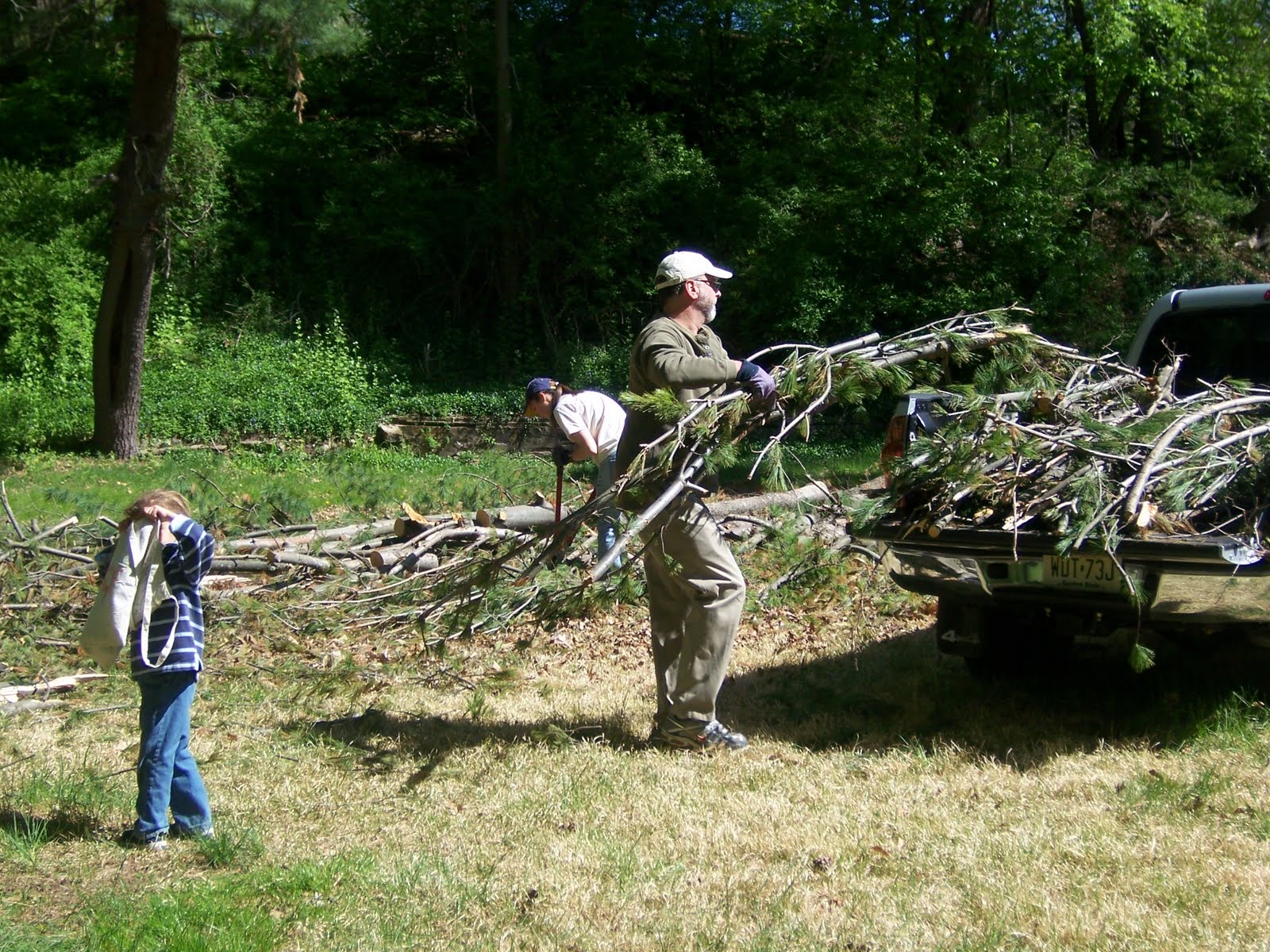
Thanks to everyone who made our Spring Cleaning Day a success. The kitchen in the cottage smells a lot nicer, the front patio looks a lot cleaner, and the fallen pine in the back is almost all gone.

Jim works on cutting our fallen pine into manageable pieces.

Joe arrives with reinforcements.

Kristin sweeps off the front patio.

Marge and Kristin clean the kitchen area of the cottage, which we hope to find a tenant for soon.

Neil load limbs into Jim's trunk while daughter Cambria supervises.


A special thanks to Faith for being our official photographer for the day!

Wednesday, April 21, 2010

Thinking about water efficiency at Willow Hall

We’ll be the first to tell you that “going green” can take some time. It’s a process where we adjust our lifestyles (or office-style in our case) to be more considerate of the environment. It’s also something which might never be finished as our understanding of the environment continues to grow and new technology becomes affordable.

Take our water usage at Willow Hall for example. There are four bathrooms in Willow Hall. When we were almost ready to move in last summer, our plumber informed us that two of the four toilets were broken beyond repair. While this posed a bit of a problem for the staff, it provided an excellent opportunity to install more efficient equipment in the two bathrooms.

The apartment toilet is in proper working order (for now) so we’ve decided to hold off on replacing it. The downstairs toilet is another story (see the photo below). Besides that obvious aesthetic issue that the toilet, sink, and bathtub are black and never look clean, the toilet tank is huge and uses at least 5 gallons per flush. (The current standard for toilets is 1.6 gallons per flush and high efficiency toilets use 1.28 gallons or less.)


Needless to say, as an organization that works to protect water supplies, we’re not particularly proud of that toilet. But there are plans to replace it with a more efficient toilet when we get funding to make the whole bathroom ADA-compliant.

In the future we would also like to upgrade our faucets with more efficient models as well. Like we said, it’s a process.

Efficiency is an important component of reducing our water usage. There are some behaviors we can’t stop doing, such as washing our hands or flushing the toilet (unless you have a composting toilet). But we can minimize the impact of those behaviors by using efficient fixtures that let you do the same thing with less water. Though it’s important to note that even with efficient fixtures, 30 minute showers are still a waste of water.

Tuesday, April 20, 2010

Thinking about Earth Day

In honor of Earth Day this week (April 22) we’ll be highlighting some of the ways we at the PRC are trying to practice running an environmentally friendly office here at Willow Hall.

The official description for our preservation of Willow Hall is an adaptive re-use project. This means that we are preserving a historic site by using for a new purpose. In this case, we took a residential home and now use it as office space while still maintaining its historic integrity.

This type of project represents a marriage of historic preservation and sustainability. Demolishing a building that was in fine working order to just build a new one in its place would have been a tremendous waste of resources. By working with what already exists, we conserve natural resources and protect a piece of our heritage.

Thursday, April 15, 2010

Green Beans

Apparently, green beans are self pollinating. Which is very good news since Allyson planted the green beans seeds far too early and a few days ago they started blossoming in our greenhouse/bathroom. It's a good thing the frost season should be done soon.


Baby green beans

In other horticultural news, Susan's Hibiscus is blooming again while she is not here.

Monday, April 12, 2010

We're looking for a few good interns!

Summer at the Passaic River Coalition means intern season. This summer we would like to have four college or recent graduate intern with us. The intern descriptions are available on our website. The summer internship is a 10-week full time position with a $2,500 stipend. Interested students should contact Matt Polsky at, mattpolsky@passaicriver.org.